Pub.lished Movie Reviews
Harvey (1950)
Harvey is an invisible white rabbit, standing over six feet tall, that can only be seen by Elwood P. Dowd. Elwood, a charming and eccentric character, takes great pleasure in introducing his silent, unseen companion to everyone he encounters.
Remarkably, most of Elwood's acquaintances are quite content with accepting his imaginary friend. Elwood's charm and wealth lend him an air of eccentricity rather than insanity in the eyes of most people.
However, Elwood's sisters find themselves as social outcasts. The social elite are unsure of how to react when introduced to an invisible white rabbit of such stature, leading to a decline in attendance at their parties.
Seeing the effect on their social lives, Elwood's sisters make the decision to have Elwood committed to an institution. Elwood, on the other hand, is quick to explain that Harvey is a púca - a benign, yet mischievous creature. Coincidentally, a series of mischievous events begin to occur.
This leads one to question, despite Harvey never being seen by the audience, could Harvey actually be real? The true charm of this movie is derived from Jimmy Stewart's convincing portrayal of Elwood, which leaves the audience contemplating that even if Harvey doesn't exist, perhaps he should.
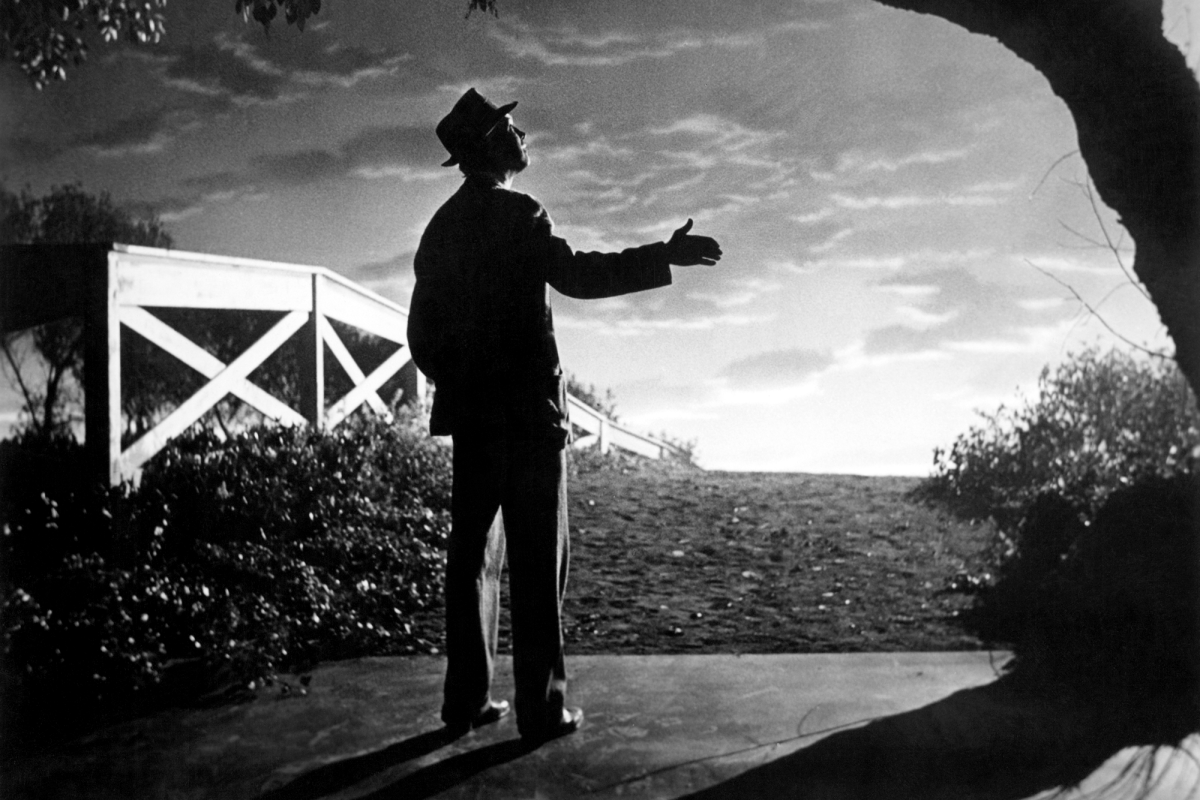
"Well, I've wrestled with reality for 35 years, Doctor, and I'm happy to state I finally won out over it."
- You prefer action-packed movies
- You aren't a fan of old, classical films
- You like films with high-drama and complex plotlines
- You don't enjoy movies with comedic elements
- This movie may not cater to very young audience due to its older and more sophisticated humor
Arsenic and Old Lace (1944)
Harvey (1950) and "Arsenic and Old Lace" (1944) are classic examples of screwball comedies that blend the absurd with the everyday in a charming and entertaining manner. They feature eccentric yet endearing characters confronted with bizarre situations, which they navigate with a peculiar kind of logic. The light-hearted, whimsical humor, combined with a sharp and clever dialogue, makes both films a delight for those who appreciate humor with a touch of the absurd. Moreover, the standout performances by James Stewart in Harvey and Cary Grant in "Arsenic and Old Lace" add further to the appeal of these timeless classics.
The Thin Man (1934)Connoisseurs of the 1950 film "Harvey" will likely enjoy "The Thin Man" from 1934 because both films offer a mix of comedy, mystery, and drama, all wrapped up in a sophisticated package. These movies feature charismatic lead characters who, in their own quirky ways, challenge the world around them. James Stewart's portrayal of Elwood P. Dowd in "Harvey" and William Powell's role as Nick Charles in "The Thin Man" both feature a unique blend of wit, charm, and eccentricity. Additionally, both films present intriguing mysteries and are filled with clever dialogue, making them a joy for those who appreciate classic cinema.
Mr. Deeds Goes to Town (1936)Harvey (1950) and "Mr. Deeds Goes to Town" (1936) are classic films that offer a heartwarming exploration of characters who, despite being perceived as eccentric or naive by others, demonstrate wisdom, kindness, and authenticity that often elude the 'normal' society. They are filled with humor, charm, and a profound depth that subtly critiques societal norms and prejudices. The lead characters, Elwood P. Dowd in Harvey and Longfellow Deeds in "Mr. Deeds Goes to Town," are both endearing, unique individuals who manage to touch the hearts of those around them. Their stories, though filled with whimsy and humor, also carry a deep, meaningful message about human nature and societal values. If you appreciate the mix of light-hearted comedy and thoughtful commentary in Harvey, you are likely to enjoy the similar themes in Mr. Deeds Goes to Town.
Mr. Smith Goes to Washington (1939)Those who love Harvey (1950) will also love "Mr. Smith Goes to Washington" (1939) because both films share a common theme of a kind-hearted, yet misunderstood, protagonist who challenges societal norms. Each film is a blend of drama and comedy, with a strong emphasis on character development and unique plots that both captivate and amuse the audience. Both films also showcase the exceptional acting talents of James Stewart, who brings to life characters that are genuine, relatable, and endearingly eccentric, making both films timeless classics.
The Philadelphia Story (1940)Harvey (1950) and "The Philadelphia Story" (1940) are iconic films that embody the charm and wit of the classic Hollywood era, featuring captivating characters and superb performances from their lead actors. They share a common thread in their exploration of eccentricity, social norms, and human connection. Harvey, with its invisible rabbit protagonist, and "The Philadelphia Story," with its sharp, sophisticated dialogue, both delight viewers with their perfect blend of comedy, drama, and romance. Ultimately, fans of Harvey will appreciate The Philadelphia Story’s similar blend of whimsy, character depth, and social commentary.
Citizen Kane (1941)"Harvey" (1950) and "Citizen Kane" (1941) are classic films that are known for their unique storytelling methods, compelling characters, and thought-provoking themes. They both provide a deep exploration of their main characters - Elwood P. Dowd in "Harvey" and Charles Foster Kane in "Citizen Kane," who are both eccentric in their own ways and challenge societal norms. The films also touch on themes of loneliness, individuality, and the pursuit of happiness, all while utilizing innovative cinematography. Hence, lovers of "Harvey" will also appreciate the narrative depth, character development, and cinematic techniques in "Citizen Kane".
North by Northwest (1959)Fans of "Harvey" will also love "North by Northwest" as both films are characterized by their clever and witty scripts, masterful direction, and engaging performances, particularly from the leading men James Stewart and Cary Grant respectively. Both films skillfully blend elements of comedy, drama, and suspense, creating a captivating cinematic experience. In both movies, the main characters find themselves in unusual and thrilling circumstances, and their journey to resolve these situations provides plenty of intrigue and entertainment.
The Manchurian Candidate (1962)Those who appreciate the 1950 film "Harvey" for its clever, engaging storyline and strong performances are likely to similarly enjoy "The Manchurian Candidate" (1962). While the two films differ in genre, with "Harvey" a comedy-drama and "The Manchurian Candidate" a political thriller, both employ elements of surrealism and psychological manipulation that challenge the viewers' perception of reality. Each film is characterized by sharp dialogue, complex characters, and an undercurrent of social commentary that keeps audiences engaged until the final scene. Therefore, the intelligent storytelling and compelling performances present in both films will appeal to viewers who appreciate nuanced, thought-provoking cinema.
The Apartment (1960):"The Apartment" is a classic romantic comedy directed by Billy Wilder. Like "Harvey," it features a likable protagonist who navigates through life's difficulties with a unique blend of humor and grace. Jack Lemmon's performance in this film is as memorable as James Stewart's in "Harvey" and Shirley MacLaine is equally as captivating. The movie's delicate balance of humor and drama paired with masterful storytelling makes it a worthy recommendation for "Harvey" fans.
His Girl Friday (1940):If quick-witted dialogue and remarkable characterization are what caught your interest in "Harvey," "His Girl Friday" might be your next go-to. It's a fast-paced screwball comedy starring Cary Grant and Rosalind Russell, directed by Howard Hawks. While maintaining the comedy throughout, it cleverly touches upon serious subjects, just as "Harvey" does.
The Best Years of Our Lives (1946):This film, directed by William Wyler, is a departure from "Harvey"'s comedic tone but it deals with a central theme that fans of "Harvey" would appreciate - adapting to post-war society. It's a poignant, powerful drama that delves into its characters' lives and struggles and manages to strike a cord with audiences much like "Harvey" did.
You Can't Take it With You (1938):Directed by Frank Capra, "You Can't Take it With You" is a quirky, heartwarming gathering of hilarious characters. Much like "Harvey," this film presents the protagonist's unusual worldview as being, in many ways, superior to the norm. It won the Best Picture Oscar and its joyous celebration of eccentrics is something that should appeal to any fan of "Harvey".
Like this? Then click here to see more comedy movies