Pub.lished Movie Reviews
Yojimbo (1961)
"Akira Kurosawa's boisterous, exuberant comedy-satire about violence, with Toshiro Mifune as an unemployed samurai, a sword for hire... We might expect violence carried to extremity to be sickening; Kurosawa, in a triumph of bravura technique, makes it explosively comic and exhilarating." - Pauline Kael
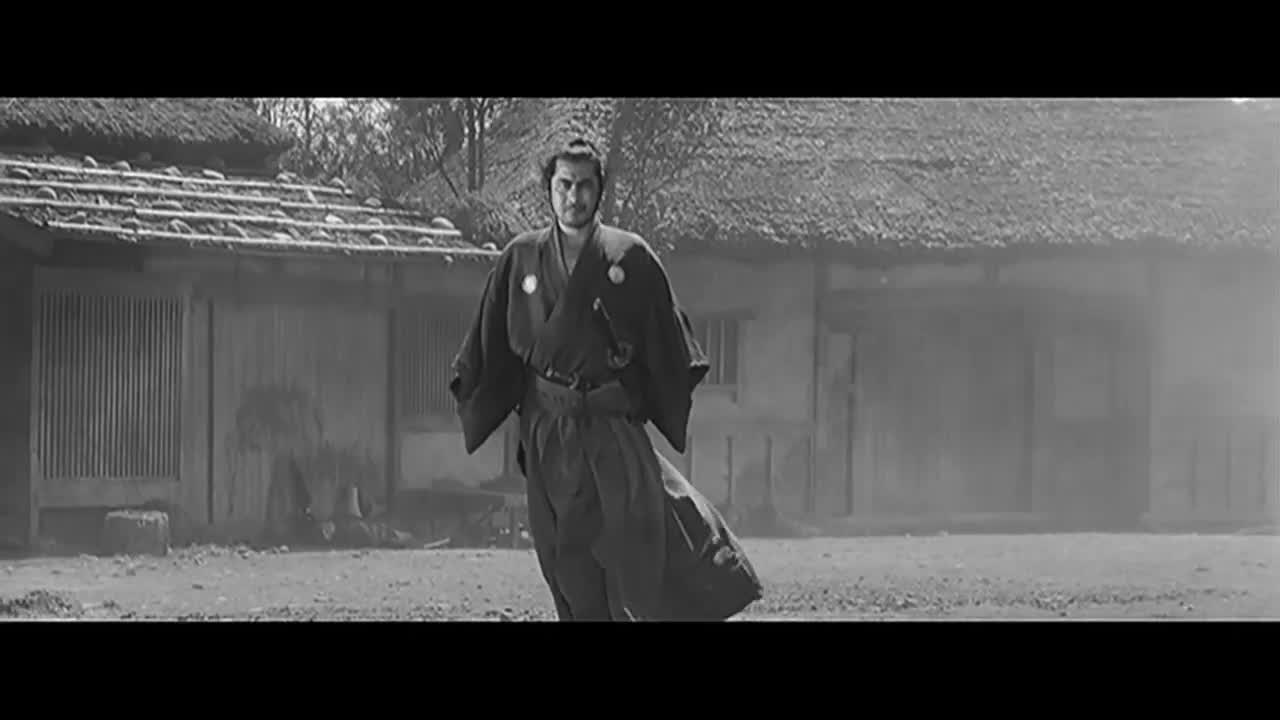
In the 1961 film, Yojimbo, a cunning ronin arrives in a town divided by two rival criminal gangs. He devises a plan to pit them against each other, aiming to liberate the town from their tyranny.
Although samurais are notoriously known for their unwavering loyalty to their employers, the protagonist, Sanjuro, finds himself unemployed due to the collapse of the feudal system and becomes a masterless samurai, a Ronin. However, he is not just any ordinary Ronin, as he does not serve those who offer him payment. Instead, Sanjuro's loyalty lies with the poor and oppressed, enabling him to manipulate both sides who incorrectly believe he will uphold loyalty to those who compensate him.
Any film featuring Toshiro Mifune is a treat, and "Yojimbo" is no exception. This film is the blueprint for the John McLane-type characters we see today. Mifune masterfully crafted the combination of sarcasm and badassery, displayed superbly in "Yojimbo." The film also introduces the subtle humor interwoven with the action sequences, a characteristic that has been incorporated into many successful action films.
Director Akira Kurosawa tightly orchestrated every element of his films, except one: Toshiro Mifune was not told how to act by Kurosawa. Mifune had spent hours watching lions prowling, circling, and pouncing in the zoo as inspiration for one of his characters. And like a lion, Mifune's acting is magnetic to watch.
However, Kurosawa doesn't structure the movie around the plot or action in the same way as most modern Western films. Instead, he intersperses the action with dramatic scenes, providing the audience with a deeper understanding of the protagonist, his motivations, and his cunning strategies to deceive both sides.
"Yojimbo's" influence spreads far and wide, with A Fistful of Dollars being an almost shot-for-shot remake. The film has significantly influenced numerous others, including Star Wars, due to its masterful use of framing, camera movement, editing, and visual metaphors.
- You have a low tolerance for violence and bloodshed. The movie contains several fight scenes and duels.
- You prefer modern cinematic effects and technologies.
- You struggle with reading subtitles as the movie is in Japanese and requires English subtitles for non-Japanese speakers.
- You're not a fan of foreign films or movies that provide political and social commentary.
- You prefer watching movies with color. Yojimbo is filmed in black and white.
Warning: The following may contain spoilers:
What's the deal with Yojimbo? This samurai guy, he strolls into town, sees two gangs fighting, and instead of turning around and walking out like any sane person would, he decides to stick around and play them against each other. I mean, who does that? It's like going to a restaurant, seeing the kitchen's on fire and saying "You know what? I think I'll have the steak. Medium rare."
And then there's the name, Yojimbo, which translates to bodyguard. Bodyguard? The guy's more like a one-man wrecking crew. He's chopping people up left and right. If that's a bodyguard, I'd hate to see what the guy he's protecting looks like.
But you know, despite all this, there's something about Yojimbo. You start watching it and you're like, "This is ridiculous!" But then, two hours later, you're still there, glued to the screen, and you're like, "Well, I guess I'm a fan of samurai movies now." So, hats off to you, Yojimbo. You're weird, you're confusing, but boy are you entertaining!
Seven Samurai (1954)
Since you're a fan of Yojimbo, you'll likely appreciate another iconic film from the same director, Akira Kurosawa. Seven Samurai tells the story of a village of farmers that hire seven ronin (masterless samurai) to combat bandits who will return after the harvest to steal their crops. Much like Yojimbo, this film explores themes of morality, courage, and sacrifice.
Citizen Kane (1941)Those who love "Yojimbo" (1961) will also love "Citizen Kane" (1941) because both films are influential masterpieces from renowned directors, Akira Kurosawa and Orson Welles respectively, that revolutionized cinema with their innovative storytelling and technical brilliance. "Yojimbo" with its masterful samurai action and dark humor and "Citizen Kane" with its complex narrative structure and deep focus cinematography, offer unique perspectives on human nature, power, and corruption. Their intricate plots, compelling characters, and stunning visuals make them enticing for any film enthusiast who appreciates groundbreaking, thought-provoking cinema.
Rashomon (1950)Both Yojimbo and "Rashomon" are iconic films directed by the masterful Akira Kurosawa, celebrated for their nuanced storytelling, innovative camera work, and profound exploration of human nature. Yojimbo fans will appreciate Rashomon's similarly complex characters, evocative cinematography, and the innovative narrative structure that challenges viewers' perceptions of truth and morality. Additionally, both films feature powerful performances by Toshiro Mifune, one of Kurosawa's frequent collaborators, whose raw intensity and depth of character add a captivating layer to the narrative.
Monty Python and the Holy Grail (1975)Lovers of "Yojimbo" (1961) may also appreciate "Monty Python and the Holy Grail" (1975) because both films subvert their respective genres through humor and satire. "Yojimbo" is a samurai film that uses its lone, wise-cracking protagonist to parody traditional samurai heroics and "Monty Python and the Holy Grail" is a comedy that lampoons Arthurian legend and medieval quest narratives. Both films employ irreverence and wit to challenge genre conventions, making them appealing to viewers who appreciate a clever, humorous approach to storytelling.
Taxi Driver (1976)Both Yojimbo and "Taxi Driver" are classic films that explore the themes of violence, morality, and isolation, featuring anti-hero protagonists who navigate through corrupt societies. Yojimbo, directed by Akira Kurosawa, and "Taxi Driver," directed by Martin Scorsese, are both characterized by their gritty, atmospheric settings, the characters' psychological depth, and their directors' innovative filmmaking techniques. The films also share a dark humor and a focus on characters who, despite their moral ambiguity, strive to make a difference in their respective societies. For these similarities in theme, style, and character exploration, those who love Yojimbo will also love Taxi Driver.
Ran (1985)Yojimbo (1961) and "Ran" (1985) are masterpieces directed by Akira Kurosawa, showcasing his flair for cinematic storytelling through a blend of Japanese history and culture. The two films share a common thread of featuring samurais and feudal Japan, employing dramatic visuals, intense battles, and complex character studies. Kurosawa's distinctive style of blending Shakespearean tragedy with Japanese historical drama in "Ran" mirrors the dark humor and social commentary of Yojimbo, making it a must-watch for Yojimbo lovers.
Crouching Tiger, Hidden Dragon (2000)Enthusiasts of "Yojimbo" (1961) will appreciate "Crouching Tiger, Hidden Dragon" (2000) for its similar exploration of the heroic warrior archetype, conflict between personal desire and duty, and its use of innovative cinematic techniques. Both films beautifully blend elements of action, drama, and romance, and are steeped in their respective cultural traditions, Japanese samurai and Chinese wuxia, creating visually stunning and emotionally poignant narratives. The choreographed fight scenes in both films are highly stylized and serve not just as action sequences, but as essential parts of the storytelling, making both films unforgettable cinematic experiences.
The Hidden Fortress (1958):Another gem from Akira Kurosawa, The Hidden Fortress puts a pair of comical peasants at the center of the story, which unfolds into a tale of hidden royal treasure and deceptive identities. It's a highly enjoyable adventure story with rich characters and a lot of humour, which influenced numerous filmmakers, including George Lucas in making Star Wars.
Throne of Blood (1957):This is yet another of Kurosawa's samurai epics, a dark and atmospheric take on William Shakespeare's Macbeth. Rather than the modern environment of Yojimbo, this film takes us to the medieval era of feudal Japan, examining ambition, treachery, and their consequences.
Samurai Rebellion (1967):Directed by Masaki Kobayashi, it’s an exploration of honour and family duty in a society rigidly controlled by feudal laws. This film has a great emotional depth, a solid dramatic plot and an unforgettable conclusion.
Zatoichi (2003):This film is a take on the classic blind samurai character, masterfully reimagined by director Takeshi Kitano, who also stars in the title role. Balancing a fine line between comedy, drama, and thrilling swordplay - it's a unique blend that feels parts Yojimbo and entirely its own.
Like this? Then click here to see more martialarts movies